Your child is about to turn four, and you want to know if they are on track. That instinct is healthy. You watch their personality take shape every day, and you feel the quiet pressure of preschool and kindergarten coming up fast. This guide shows you what most four-year-olds can do, plus simple ways to support the skills that still need practice.
Parents are investing in early learning more than ever. Grand View Research projects the global educational toys market will keep expanding at a strong annual rate as families spend more on learning resources at home.
Milestones are a guide, not a scorecard. Every child moves at their own pace. Still, the data shows why these years matter. The U.S. Department of Education’s Early Childhood Longitudinal Study finds that kindergarten readiness varies widely, with the widest gaps in skills like following a story and early math. Support at home is what closes those gaps.
| App | Core Focus | Age Range | Key Subjects | Pricing |
|---|---|---|---|---|
| Learning App for Kids | Personalized, play-based learning path | 2-8 years | Reading, Math, Science, Art, Logic | Free, ad-free |
| ABCmouse.com | Structured, step-by-step curriculum | 2-8 years | Reading, Math, Art, Music | Subscription |
| HOMER | Reading-focused, custom learning plan | 2-8 years | Reading, Math, Social-Emotional | Subscription |
| Khan Academy Kids | Standards-aligned core curriculum | 2-8 years | Reading, Writing, Math, Logic | Free (non-profit) |
| Epic | Digital library of books and videos | Up to 12 years | Primarily Reading & Comprehension | Subscription |
Language & Communication Milestones
At four, your child’s language takes off. They move from short phrases to full sentences, share their thoughts, and tell you real stories. This is the foundation for reading and writing, so give it plenty of fuel.
Most four-year-olds can:
- Speak clearly in sentences of five or six words.
- Tell a simple story and stick to the topic.
- Sing a song or recite a nursery rhyme from memory.
- State their first and last name, and often their parents’ names.
- Answer simple questions and grasp ideas like “same” and “different.”
Talk with your child all day long. Ask open questions like “What was the best part of your game?” instead of yes-or-no questions. Read together daily, then let them retell the story in their own words.
Cognitive Development Checklist
Cognitive skills cover how children think, explore, and solve problems. This includes memory, focus, and figuring out how things work. At four, your child treats the world like a puzzle and learns the pieces through play.
Here is what a four-year-old should know for cognitive skills:
- Name colors and numbers: most can name four or five colors and count ten or more objects.
- Understand counting: they know numbers stand for quantity.
- Recall parts of a story: they remember what happened in a favorite book or show.
- Play make-believe: they build detailed scenes and act out different roles.
- Follow three-step directions: for example, “Pick up your toy, put it in the box, and close the lid.”
- Finish simple puzzles with three or four pieces.
Sort objects by color or size, play board games, and work puzzles together. These small activities build strong thinking skills.
Social & Emotional Skills for Preschoolers
Social and emotional growth defines age four. Your child is learning to make friends, handle big feelings, and show empathy. There will be rough moments, and that is where they practice cooperation, sharing, and self-control. These skills matter as much as letters and numbers.
Watch for these signs:
- Playing with other children, not just beside them.
- Showing independence with tasks like dressing or getting a snack.
- Naming a range of emotions and using words to describe them.
- Cooperating and taking turns in games.
- Understanding “mine” and “his or hers.”
- Showing affection for family and friends without a prompt.
Name their feelings out loud: “I can see you are frustrated that the tower fell.” Model calm, friendly interactions, and use role-play to practice sharing and solving small problems.
Physical Development: Gross & Fine Motor Skills
Running, jumping, drawing, buttoning: physical growth is everywhere at four. These skills split into two groups. Gross motor skills use the large muscles for whole-body movement. Fine motor skills use the small muscles in the hands and wrists.
Gross Motor Skills
Your four-year-old is a bundle of energy and getting more coordinated by the week. Look for these milestones:
- Hopping and standing on one foot for up to five seconds.
- Kicking, throwing, and catching a large ball.
- Running with more control and climbing with confidence.
- Pedaling a tricycle or a small bike with training wheels.
Fine Motor Skills
These precise movements set up future writing and self-care. At this age, most children are:
- Drawing a person with two to four body parts.
- Cutting along a line with kid-safe scissors.
- Copying simple shapes like a square or a cross.
- Writing a few capital letters.
- Dressing and undressing, though buttons and zippers may still need help.
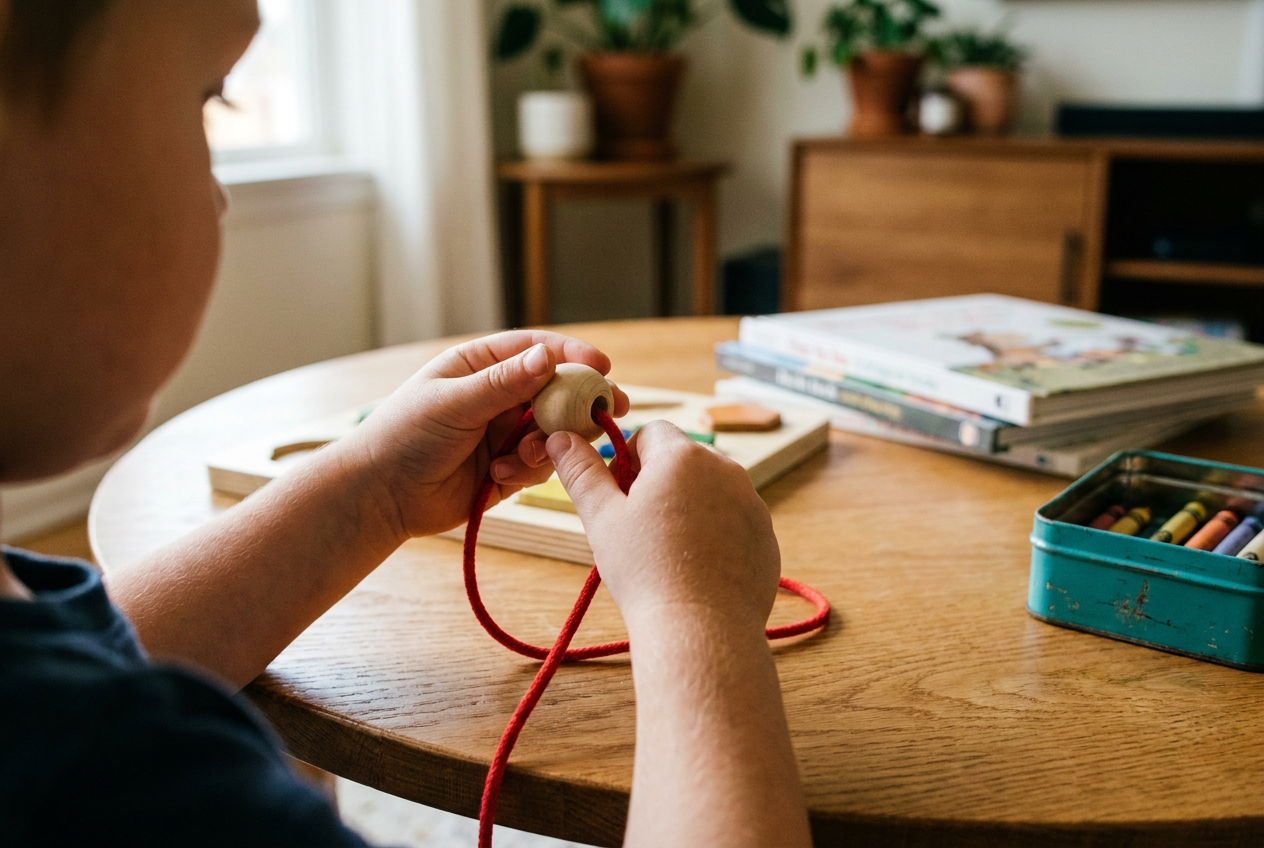
Give them room for both. Outdoor play builds gross motor skills, while blocks, beads, and play-dough strengthen little hands.
Kindergarten Readiness: Essential Pre-Reading & Math Skills
This is where most parents focus when they think about what a four-year-old should know for kindergarten. Formal academics are not the goal. Playful pre-reading and pre-math skills are.
Your child may be starting to:
- Recognize and name several letters, especially the ones in their name.
- Understand that print carries meaning and reads from left to right.
- Notice rhyming words and the sounds inside language.
- Count a group of objects up to five with one-to-one correspondence.
- Spot a simple pattern and keep it going.
Keep it fun. Point out letters on street signs, clap the syllables in names, and count the crackers on the plate. Good learning apps turn this practice into playtime.
Common Challenges Parents Face at Age Four
Even with a checklist in hand, the fourth year brings real friction. Knowing what to expect makes these moments easier to handle.
Big feelings and testing limits
Four-year-olds feel emotions strongly and do not yet have the tools to manage them. Tantrums, defiance, and sudden mood swings are normal signs of a developing brain, not bad behavior. Stay calm, name the feeling, and set clear, consistent limits so your child slowly learns to self-regulate.
Comparing your child to other kids
It is natural to measure your child against a cousin or the neighbor’s kid the same age, but development is uneven by design. One child talks early and walks late; another does the reverse. Comparison feeds worry without adding useful information. Track your own child’s progress over weeks and months instead of against the child next door.
Telling quality screen time from filler
Not all screen time is equal. Passive video a child watches without thinking does little for learning, while active, interactive content that asks a child to respond, choose, and solve can reinforce real skills. When you evaluate any learning app, look for activities that adapt to your child and invite them to take part rather than just watch.
How to Choose the Right Learning Tool for Your Child
After running through this checklist, you will spot clear strengths and a few areas that need practice. The goal is not a perfect score. It is a balanced, supportive setup where your child grows with confidence. Look for tools that engage them, adapt to their level, and match their curiosity.
The best learning tool feels like play, not homework. It grows with your child and adds new challenges as they master each skill. Whether you pick hands-on activities, learning games, or a full program, choose the one that fits your child’s pace and makes learning something the whole family enjoys.
Learning App for Kids puts all of these areas on one personalized path: reading, math, science, art, and logic. The activities adjust to your child’s level, so they stay challenged without feeling overwhelmed. Start today and let your child build real skills through play. Four is early for devices, but it is not too early for the first safety habits. Staying safe online is written to be read together.
If you want the next step rather than the checklist, the guide for four year olds covers choosing between Playgroup and Kindergarten level.
Frequently Asked Questions (FAQs)
What if my 4-year-old isn’t doing everything on this list?
This list is a guide, not a deadline. Children develop at different rates. If you have real concerns about your child’s development, talk with your pediatrician or an early childhood educator.
How much screen time is appropriate for a 4-year-old?
The American Academy of Pediatrics recommends about one hour per day of high-quality programming for preschoolers. Watch with your child, talk about what you see, and pick interactive, educational content to make that hour count.
My 4-year-old can’t write their name yet. Should I be worried?
No. Some four-year-olds write a few letters, but true name-writing often arrives closer to age five. Build fine motor skills first through drawing, coloring, and playing with clay. That strengthens the hand muscles writing needs.
Are learning apps effective for preparing a 4-year-old for kindergarten?
High-quality learning apps can help when they are interactive and adapt to your child’s level. Look for ones that turn pre-reading, counting, and problem-solving into play rather than drills. A personalized path keeps your child challenged without frustration, which builds the confidence and core skills kindergarten asks for.
What is the most important skill for kindergarten readiness?
Early academic skills help, but many educators rank social-emotional skills first. A child who follows directions, manages their feelings, and gets along with peers has a strong foundation for school.
Give the Learning App for Kids a try — it's free
Ad-free, bilingual lessons + a free AI tutor, on web, Android and iPhone.