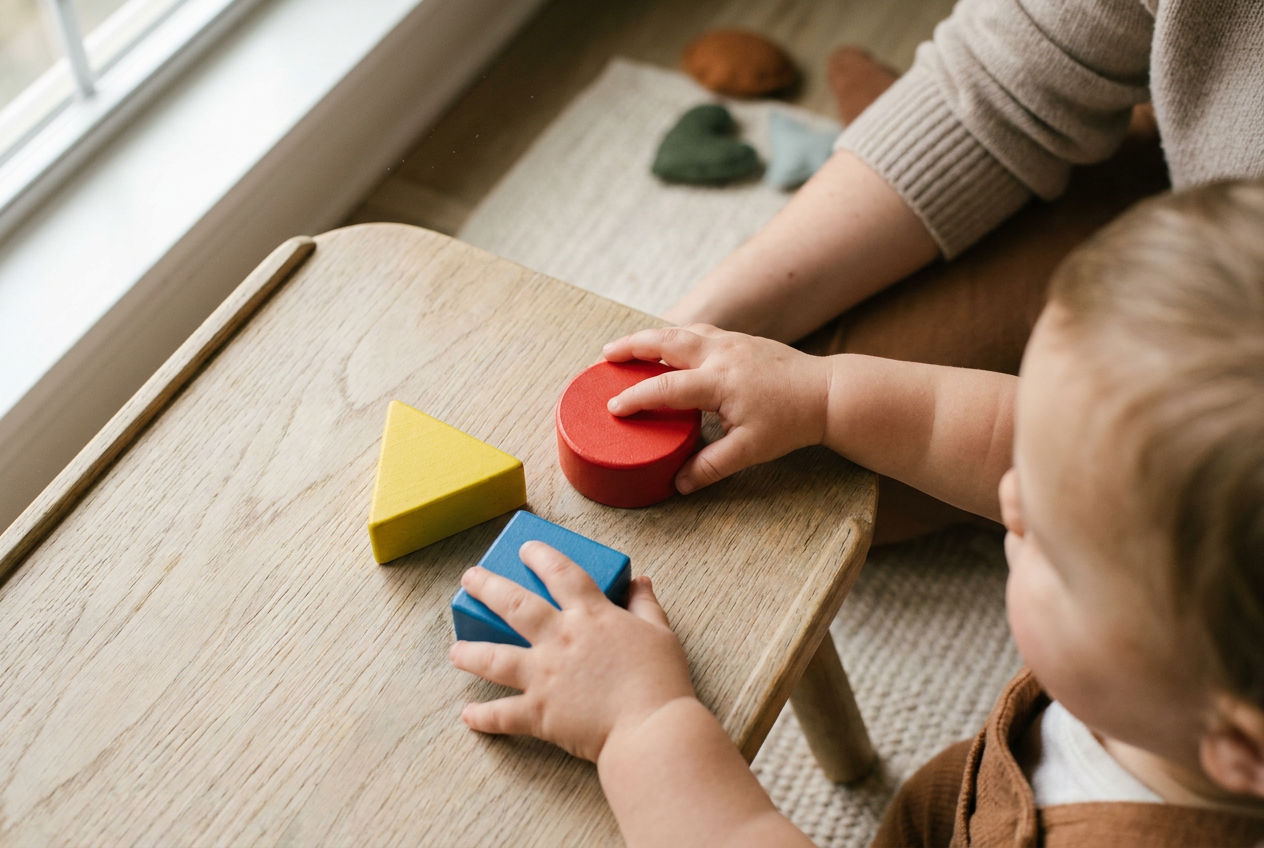
Your toddler is learning about the world every single day. Teaching shapes and colors sounds simple, until you try it and their attention drifts in ten seconds. The fix is to turn every lesson into a game. Toddlers learn best through play, and you already own everything you need to start today.
The first years of life bring explosive brain growth. A young child’s brain forms more than one million new neural connections every second. Those connections build the foundation for everything your child learns later. The American Academy of Pediatrics confirms that play drives development, giving kids the skills they need for school and problem-solving. That is why a playful approach works best when you teach toddlers about their world, shapes and colors included.
| Method / Tool | Best For | Skills Developed | Parental Involvement |
|---|---|---|---|
| Learning App for Kids | Structured, interactive learning | Color/shape recognition, matching, sorting, vocabulary | Low to medium (co-play recommended) |
| Khan Academy Kids | Free, comprehensive curriculum | Early literacy, math, logic, creativity | Medium |
| ABCmouse.com | Guided learning path | Reading, math, science, art & colors | Medium |
| Physical Shape Sorters & Blocks | Hands-on, tactile learning | Fine motor skills, spatial reasoning, problem-solving | High |
| Picture Books | Vocabulary building & quiet time | Object identification, language, listening skills | High |
| Creative DIY & Printable Activities | Creative, budget-friendly play | Creativity, fine motor skills, following directions | High |
Why Play Works for Toddlers
Play is not separate from learning for a toddler. It is learning. A child who is having fun stays motivated, focused, and remembers more. Play lets them explore, experiment, and connect ideas on their own terms. That builds shape recognition and color skills, plus curiosity, problem-solving, and confidence. This guide on how to teach shapes and colors runs on that principle.
Phase 1: Building the Foundation (12-24 Months)
At this age, aim for exposure, not memorization. You are introducing the language of shapes and colors in a natural way. Stick to common shapes (circle, square, triangle) and primary colors (red, blue, yellow).
Start with Simple, Everyday Objects
You don’t need special toys. Your home is already full of shapes and colors. Point them out and name them as you go about your day. Use short, descriptive phrases: “Here is your red cup,” “Look at the round ball,” or “Let’s read the square book.” Keep your words consistent and repeat them often.
Introduce One Concept at a Time
Focus on one new concept for a few days before adding another. Spend a few days pointing out everything “blue,” then move to “yellow.” Do the same with shapes. Start with circles, which toddlers spot most easily, before you move to squares.
Use Repetitive, Simple Language
Repetition drives toddler learning. Simple songs about colors and shapes cement the ideas fast. Sing “Twinkle, Twinkle, Little Star” for stars and diamonds, or make up a tune about a “blue, blue ball.” The rhythm and melody make the words stick.
Phase 2: Hands-On Exploration and Reinforcement (2-3 Years)
Now your toddler is ready for hands-on activities. This is when they start to sort, match, and name shapes and colors on their own. Lean into tactile play and make learning physical.
Engage with Shape Sorters and Puzzles
Shape sorters and simple jigsaw puzzles are perfect here. They teach kids to study each shape and use trial and error to find the fit. That sharpens fine motor skills, hand-eye coordination, and spatial reasoning while it reinforces shape recognition.
Go on a Color Hunt
Turn color identification into a game. Announce, “Let’s find everything red!” Then walk through the house or the neighborhood, spotting red cars, red flowers, and red stop signs. Hand your child a basket to collect red items, and you add a sorting challenge too.
Incorporate Art and Sensory Play
Art opens up color exploration. Finger painting with one or two primary colors shows kids how colors mix. Colored play-dough lets them mold shapes and feel them in 3D. Fill a sensory bin with colored rice or pasta, add scoops and cups, and let them pour and sort.
Add Interactive Learning Apps
A well-designed app reinforces every concept you practice at home. The Learning App for Kids offers games built around shape and color recognition. Each activity gives instant feedback and adjusts to your child’s skill level, so they stay engaged. Play together, and screen time becomes a shared lesson in how to teach shapes and colors.
Phase 3: Making Real-World Connections (3+ Years)
By age three, many kids name several shapes and colors with confidence. Now you deepen that knowledge. Help them apply it and spot these concepts everywhere around them.
Point Out Shapes and Colors Everywhere
Push your observations further. Instead of a plain “round wheel,” say, “The wheels on the bus are circles that go round and round.” At the store, ask them to find the “yellow bananas” or the “green broccoli.” Shapes and colors live everywhere, not just in toys and books.
Read Books That Focus on Concepts
Pick books that put shapes and colors front and center. As you read, ask, “Can you find the triangle on this page?” or “What color is the bear’s shirt?” You build vocabulary, comprehension, and observation skills at once. It is a calm way to end the day and reinforce learning.
Play Sorting and Matching Games
Make sorting games tougher. Ask your child to sort colorful blocks by color, then sort the same pile by shape. Draw a few shapes on paper and have them place matching blocks on top. These games build logical thinking and classification, the roots of early math.
Common Challenges in Teaching Shapes and Colors
Every child learns at their own pace, and bumps are normal. A disinterested toddler is often just tired or not ready for that activity. Switch games or take a break. Never pressure them or show frustration, because the goal is to keep learning positive.
Short attention spans come with the territory. Plan short bursts of learning play, five to ten minutes at a time, spread across the day. Follow your child’s lead. If they fixate on the color of their snack, seize that moment for a quick color lesson.
It is easy to worry about whether your toddler is behind. Try not to compare your child to others, because the range of normal is wide. Most children name a few colors and basic shapes between ages 2 and 3, and steady exposure matters more than hitting an exact date. If your child consistently confuses the same colors past age 4, mention it to your pediatrician, since it can occasionally point to color vision differences worth checking.
Many parents feel short on time or worry they are not the crafty type. You do not need elaborate setups or a knack for art projects. Narrating the colors and shapes already around you counts, and a structured tool like Learning App for Kids carries the load when your hands are full, turning a few minutes of screen time into guided, mess-free practice.
How to Put Teaching Shapes and Colors Into Practice
Teaching shapes and colors has nothing to do with drills or flashcards. It comes down to integration and joyful discovery. Weave the concepts into daily talks and playtime. Stay patient, stay enthusiastic, and celebrate every small win. Treat learning as a shared adventure, and you give your child the confidence to explore, ask, and connect. Turn everyday moments into play, and you teach far more than circles and squares.
Ready to add a new tool to playtime? Explore Learning App for Kids and watch our games turn shapes, colors, and more into an adventure your child asks for. Start playing today. Screens make every colour from just three, which is a lovely follow on once shapes and colours have landed. How screens make pictures shows how.
For what else fits at this stage, the activities for three year olds keep to the same rule: spoken prompts, picture answers, five minutes at a time.
Frequently Asked Questions (FAQs)
At what age should I start teaching my toddler shapes and colors?
Start introducing shapes and colors around 12 to 18 months by naming objects around the house. Most kids begin to understand and name a few colors and basic shapes between ages 2 and 3. Follow your child’s own pace and interest.
What are the first shapes and colors to teach a toddler?
Begin with the primary colors, red, blue, and yellow, and the most recognizable shapes, the circle, square, and triangle. These are the easiest for young toddlers to spot and name in everyday objects, so they build early confidence before you move on to trickier colors and shapes.
My toddler is mixing up colors. Is this normal?
Yes, completely normal. Mastering color names takes time and practice. Your child might learn “blue” and use it for every color for a while. Keep supplying the right name, like “That’s a yellow banana,” and the distinctions click into place.
How much screen time is appropriate for learning apps?
The American Academy of Pediatrics recommends co-viewing or co-playing when you introduce digital media. For ages 2 to 5, cap screen use at about one hour a day of high-quality programming. A shared 10 to 15 minute app session fits right into that window.
How can I tell if my toddler is on track with learning colors and shapes?
Most children can name a few colors and identify basic shapes between ages 2 and 3, though the range of normal is wide. Focus on steady progress rather than a fixed timeline. If your child shows no interest by age 3, or consistently confuses the same colors past age 4, check in with your pediatrician for reassurance and guidance.
Give the Learning App for Kids a try — it's free
Ad-free, bilingual lessons + a free AI tutor, on web, Android and iPhone.