Keeping your child engaged with learning is hard when your schedule is packed. Most parents wrestle with the balance between education and play, especially around screens. Pew Research Center found that 71% of parents with a child under 12 worry their child spends too much time on screens. You don’t need to ban screens or formal lessons. You need to make the whole experience fun.
You also have strong tools to work with. The market for kids’ educational apps is climbing fast. Grand View Research projects it will grow at a 16.2% compound annual rate through 2030. That growth signals one thing: well-built apps work. Pair the right strategies with the right tools, and your home becomes a place kids want to explore.
| Learning App | Age Range | Core Focus | Platform | Pricing Model |
|---|---|---|---|---|
| Learning App for Kids | 2-8 | All-in-One: Reading, Math, Science & More | iOS, Android, Web | Subscription |
| ABCmouse | 2-8 | Comprehensive Curriculum (All Subjects) | iOS, Android, Web | Subscription |
| Khan Academy Kids | 2-8 | complete Learning (All Subjects) | iOS, Android, Amazon Fire | Free |
| Homer | 2-8 | Personalized Reading Pathway | iOS, Android, Web | Subscription |
| Prodigy Math | 6-14 (Grades 1-8) | Gamified Math Practice | iOS, Android, Web | Freemium |
1. Turn Learning into a Game (Gamified Learning)
Gamification is one of the best ways to make learning fun. You apply game elements like points, badges, and friendly competition to learning tasks. The system can be simple. Build a “Math Master” leaderboard on the fridge. Run a spelling bee with silly prizes. When a kid treats learning as a game to win, motivation and retention climb.
These learning games for kids tap their natural drive to play and win. Turn a vocabulary list into a scavenger hunt where they find objects that start with each letter. Use a deck of cards to drill addition and subtraction. You reframe the activity from work to fun, and that builds a positive link to learning.
2. Use Technology Thoughtfully
Screen time helps when you use it on purpose. Steer your child away from passive video and toward interactive apps that push them to think. Moving a child from passive YouTube watching to active, educational screen time is one of the hardest shifts for parents, and the right app makes that switch for you. The best learning apps come from child development experts and teach core skills through play, stories, and creative activities. They give kids a structured space to explore.
This is where Learning App for Kids stands out. Our app packs games, stories, and activities across reading, math, science, and creativity into one safe, ad-free space. The adaptive path matches your child’s skill level, so they stay challenged but never overwhelmed. If you are juggling kids at different ages and stages, that same adaptive path meets each one where they are, so you do not have to build a separate routine for every child. And when a subject moves past what you feel ready to teach yourself, the guided lessons carry the load. Screen time becomes easy to manage because every minute builds real knowledge and confidence.
3. Create a “Yes” Space for Learning
Set aside an area in your home as a learning nook, and think past a desk and chair. Make it a “yes” space where your child can explore, get messy, and chase curiosity without hearing “no.” Stock it with crayons, construction paper, building blocks, puzzles, and good books.
A dedicated, inviting spot tells your child that learning matters and feels good. It doesn’t need to be big. A corner of the living room or a small table in the bedroom works. Accessibility is what counts. When materials sit within reach and your child feels free to use them, educational activities at home happen on their own. That builds independence and a love for self-directed discovery.
4. Connect Learning to Their Interests
Kids engage far more with topics they already love. If your child loves dinosaurs, use that to teach history, biology, and math by counting fossils or measuring dinosaur sizes. If space fascinates them, read about planets, build a rocket from cardboard boxes, or watch a documentary about astronauts.
This shows kids that learning reaches beyond required subjects. It’s how they understand the world and dig into their passions. Ask what they want to learn, then make their interests the center of your activities. That small shift validates their curiosity and tells them their ideas matter, which sets a strong foundation for lifelong learning.
5. Take Learning Outside
The world outside your door is a rich classroom. A walk around the neighborhood turns into a science lesson when you observe insects, collect leaves, or talk about the weather. A trip to the park adds physics on the swings and biology at the duck pond.
Outdoor time gives kids a real break from screens and worksheets. Plan a nature scavenger hunt for items of different colors, textures, and shapes. Practice counting by tallying the dogs you see or the red cars that pass. These activities tie abstract concepts to the real world, which makes them stick.
6. Get Hands-On with STEM Projects & Experiments
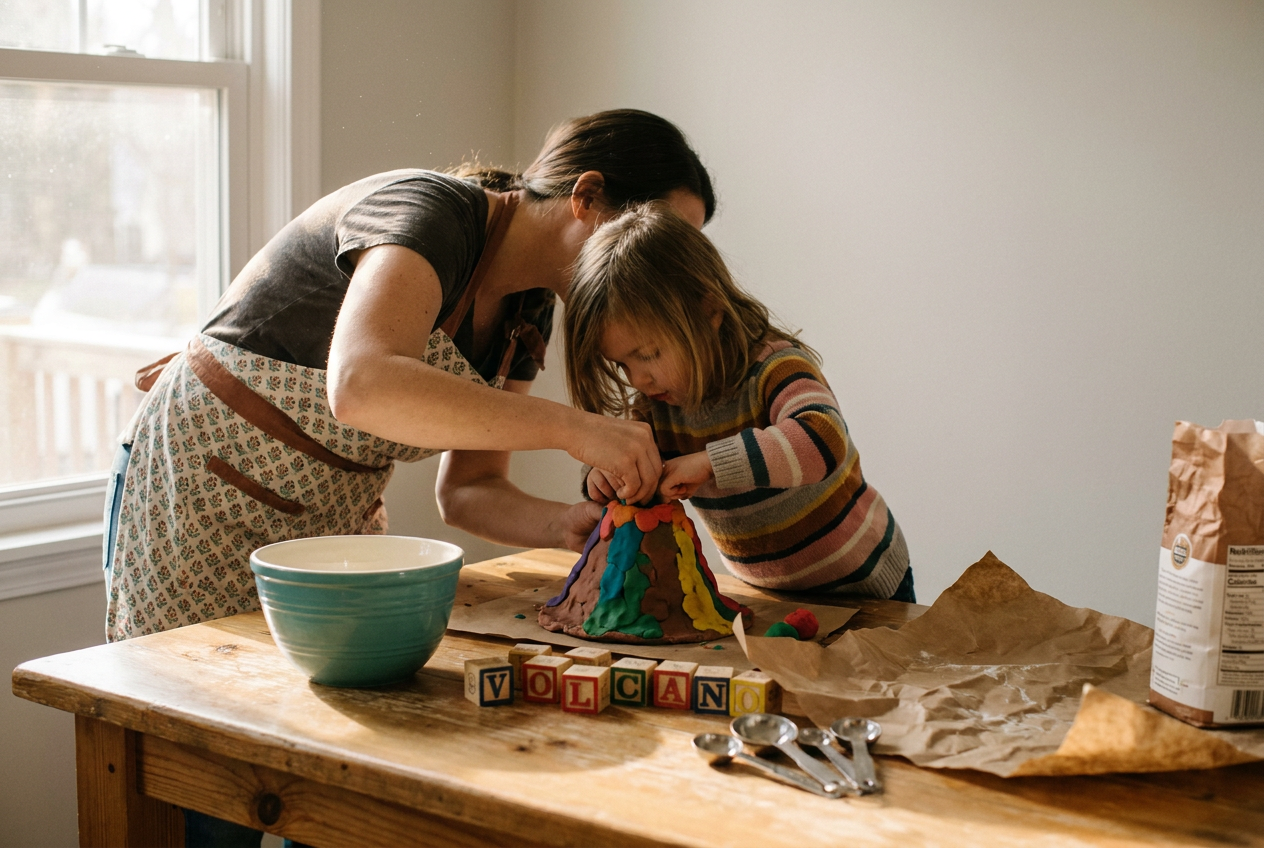
Kids, especially young ones, learn best by doing. Hands-on projects engage all their senses and show direct results. A baking soda and vinegar volcano teaches cause and effect in a thrilling way. A blanket-and-chair fort becomes a lesson in engineering and design.
Cooking and baking work just as well. A recipe involves reading, measuring, fractions, and following steps in order. Your child applies math and literacy, then eats the reward. These tactile experiences make learning concrete, and they belong in any well-rounded education at home.
7. Read Together Every Day
A love of reading is one of the best gifts you can give your child. Make reading a cozy daily ritual, not just a bedtime chore. Let your child pick the books, even the same one for the tenth time. Use funny voices and ask questions as you go: “What happens next?” or “How does that character feel?”
Regular library trips open a universe of stories and topics. When you show enthusiasm for reading, your child sees it as a pleasure. This shared time strengthens your bond, builds learning through play, and grows vocabulary, comprehension, and empathy.
8. Let Them Be the Teacher
A principle called the “protégé effect” shows we learn more deeply when we expect to teach the material to someone else. Put it to work by asking your child to teach. After they finish a level in a learning app or read a chapter, have them explain it to you or a younger sibling.
This role reversal pushes them to organize their thoughts, lock in their understanding, and build communication skills. It also boosts confidence. When they teach a concept well, they own the information and feel real pride. It’s a smart way to reinforce new knowledge while keeping learning fun.
9. Celebrate Effort, Not Just Results
To build resilience and a real love of learning, praise effort, strategy, and persistence over correct answers or high scores. Kids praised for being “smart” often fear challenges that threaten the label. Kids praised for hard work learn that effort drives growth.
Focus on the process. Say, “I love how you kept trying even when that puzzle got tricky,” or “That was a clever way to solve that math problem.” This builds a growth mindset, the belief that ability grows through dedication and work. That mindset helps kids tackle hard subjects and clear academic hurdles for life.
10. Incorporate Storytelling
Humans are wired for stories. We use them to make sense of the world, connect with others, and remember information. You can explain almost any topic through story, from historical events to scientific processes. Instead of reciting facts about photosynthesis, tell the story of a little leaf on a journey to make food for its tree.
Build stories together too. Start with a prompt like, “Once upon a time, a curious robot wanted to count all the stars,” then take turns adding a sentence. This boosts creativity, vocabulary, and narrative skill. Learning shifts from passive listening to active imagination.
How to Put Fun Learning Into Practice
These ideas don’t require an overhaul of your life. Start small and stay consistent. Pick one or two strategies that fit your family this week. Maybe a 10-minute nature walk after school, or one hands-on science experiment over the weekend.
Watch your child’s reactions. What sparks their interest? When do their eyes light up? Follow that lead. You’re building a curious, positive atmosphere over time. Weave small moments of playful discovery into your routine, and your child starts to see learning as a lifelong adventure, not just something that happens at school.
Ready to bring joyful learning home? Explore the games, stories, and activities inside Learning App for Kids and watch your child’s curiosity take off. Start your learning adventure today. Making something is often more fun than watching something. How pictures and video work turns the camera into a lesson.
If you would rather start from your child’s year than from an activity list, the age index gives a level and a realistic week for each one.
Frequently Asked Questions (FAQs)
How do I make learning fun for a child who hates schoolwork?
Connect learning to their personal interests. If they love video games, explore the basics of coding or game design. If they love art, use museum visits or drawing to teach history and culture. Frame education through their passions, and you break down resistance fast. Learning becomes more than worksheets.
What’s the right amount of screen time for learning apps?
The American Academy of Pediatrics recommends you focus on content quality and co-engagement. For children ages 2 to 5, limit screen use to about 1 hour per day of high-quality programming. For older kids, build a family media plan that balances screens with sleep, exercise, and family meals.
How can I make core subjects like math and reading fun?
Gamify both. For math, use board games that involve counting and money, or bake together to practice fractions. For reading, let your child pick the books and read aloud with funny voices. An all-in-one app like Learning App for Kids covers reading, math, science, and more in one place, so a single routine builds several skills at once. Tie each subject to real moments, like reading a recipe or calculating a discount at the store, and it gets more relevant and engaging.
Are paid learning apps like this worth it compared to free ones?
Free apps can be a fine starting point, but paid apps usually earn their cost through adaptive learning that adjusts to your child, curated content, and broader subject coverage in one place. With Learning App for Kids, you trade a small subscription for a 100% ad-free, safe space and a path that grows with your child across reading, math, science, and creativity. Weigh the cost against the time you save and the quality of what your child actually does on screen.
What if I’m not a “creative” parent?
You don’t have to be. These strategies ask for a shift in mindset, not artistic talent. A high-quality app like Learning App for Kids supplies the structure and creativity for you. Your job is to stay present, encouraging, and willing to explore alongside your child. Your enthusiasm matters most.
Give the Learning App for Kids a try — it's free
Ad-free, bilingual lessons + a free AI tutor, on web, Android and iPhone.